This article was first published on The Huffington Post – 21 February 2014
Services to help women, men and transgender people seeking to leave the sex trade are essential. Also vital are the life-saving services that are harm reduction focused such as outreach offering condoms to sex workers, sexual health screening, counselling, and syringes for intravenous drug users. These two sets of services are not mutually exclusive, but can and must be provided simultaneously. However, a BBC investigation into the policing of prostitution in Medway, Kent showed harm reduction was dangerously disrupted by their aggressive ‘cleaning up the streets’ approach.
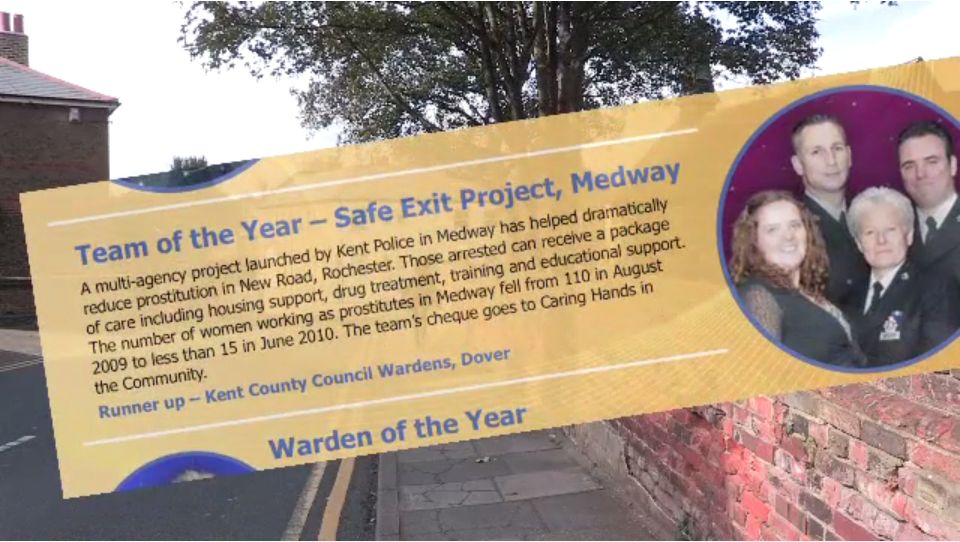
In 2009, Kent Police began a scheme in Medway called Safe Exit, supposedly to help women leave the sex trade by offering treatment for drug and alcohol addiction, training and education, and housing. These services along with others such as trauma therapy are needed by many women seeking to leave prostitution. But what our investigation uncovered was that instead of receiving these services, the women received a criminal record, a major obstacle preventing people leaving the sex trade by hindering other employment chances and keeping them trapped in prostitution.
The women targeted by the scheme were working on-street, most likely to be selling sex due to poverty, with many being single mothers. Kent Police claimed to have reduced the number of women working on-street by over 90, but it seems this figure may have been exaggerated as our sources, two public servants associated with the scheme, say originally there were only 40-50 women working on-street. Our sources also told us the women were not helped to leave the sex trade but that the scheme was a “political PR stunt”. Drug addiction treatment consisted of methadone prescribing and help with housing was a room in a shared house – a temporary solution to a permanent problem. “There was about five or six in one [house] and I’m not sure how many in the other – maybe the same. Certainly not a hundred,” we were told.
“They attached ASBOs on to them and a few ended up in prison and a few moved places, some underground,” one of our sources said. According to them, the hard line policing resulted in alienating the women from harm reduction services. This was reiterated by a woman working as an escort who told me she visited her friends working on-street in the area and provided them with condoms and lubrication as due to fear of arrest they were no longer able to access local services.
Another woman working as an escort locally told me she wanted help leaving the sex industry, but was unable to contact the Safe Exit scheme. Safe Exit did not have a website or a contact number on any of the partners’ websites. A man I met in a Medway cafe told me there were a few brothels in the area. A sex shop on the high street provided us with directories in which local women were advertising sexual services. One escort advertising website listed over 500 people in Kent. Prostitution was not eradicated in Medway. Women working on-street were displaced.
Initially, via their press office, Kent Police told us the scheme was being led by the Council. When we approached Medway Council asking how the women were helped and how many were helped as well as access for filming, they told us to contact Kent Police as the scheme was being run by them. We then put a Freedom of Information request to Kent Police, who informed us their part in the project was purely enforcement and referred us to Crime Reduction Initiatives, a charity providing people with help for substance misuse problems, that were running the Safe Exit scheme. Although CRI allege to have “delivered an award-winning project in Medway which reduced the numbers of street prostitutes from 110 to 15 over ten months” when we posed the same questions we’d asked the Council and Kent Police, CRI never responded.
As we had done with Merseyside Police when making the Inside Out documentaries for the London and North West regions that showed the hate crime approach to policing prostitution, we also asked Kent Police for access to film. This was repeatedly denied to us and in a letter to the BBC, it was implied the reason for this was restructuring of staff within the scheme, the scheme we were led to believe was still running, but the truth was the scheme had actually ceased to exist.
Although we were unable to gain access to Kent Police, in a This is Kent article I found a worrying quote from Sergeant Woolley who seems to have held a senior role running the Safe Exit team engaging with the women. “A lot of them have got no housing, they have no documents, or they have no qualifications. All of these minor things mean these women can’t take that step. We are trying to give them affection and support.” The issues he cites are not minor barriers to leaving the sex trade. They are major issues and need to be recognised for what they are so the right help can be provided to truly overcome them. And what does he mean by giving the women “affection”? Sergeant Woolley continues by saying, “But every woman involved in prostitution in the area knows that if I can catch them fair and square, they will be arrested.” With people in the sex trade suffering higher rates of rape and other violence, when a crime is committed against them they will most certainly not feel safe reporting to Kent police. As well as denying people in the sex trade the human right of the protection of the police and recourse to justice, their punitive approach puts all of society in more danger from rapists and other violent criminals.
In contrast, in Merseyside, the police and the sex work projects collaborate to provide protection and harm reduction to people in prostitution whilst facilitating exiting for those seeking to leave the sex trade. Merseyside leads the country in convictions for crimes committed against people in prostitution – a 67% conviction rate for rape was achieved in 2010 compared with the national average conviction rate for rape of 6.5% – and since their hate crime model was introduced in 2006, numbers of women working on-street have halved.
Undoubtedly, there are fewer women working on-street in Medway, though the actual number is disputable. But fewer women working on-street is not a success if it is achieved by displacing them, forcing them to work in more dangerous areas, perhaps even pushing them into the hands of pimps, giving them criminal records and as our sources confirmed, alienating them from harm reduction services, which save lives. Since the launch of Safe Exit, some women known to work on-street have died, including one woman who was murdered. This is not unusual during police crackdowns. In 2013, a 24-year-old Romanian woman working on-street was murdered in East London one month into the Police Operation Clearlight.
The only measurable element of the Safe Exit scheme, which instead of a success is a huge failure, is the number of arrests. Between 2008-2013, 67 women were charged with soliciting for prostitution* in Medway with nearly half of these charges made during 2010/11. During the five years those 67 women were charged in Medway, in other Kent districts including Thanet, Gravesham, Shepway, Sevenoaks, Tonbridge and Mailing, and Tunbridge Wells not one woman was charged with soliciting.
This was not a scheme concerned with helping a group of vulnerable women. It was a scheme concerned with gentrification.
The award Safe Exit received from Police and Crime Commissioner, Ann Barnes, was for ‘cleaning up the streets’ and not for any help given to women leaving the sex trade. When I met with Mrs Barnes, she ended the interview early after being unable to tell me what help the women received or where they are now. She could only tell me how nice the area looked.
There were no sex work projects involved in Safe Exit, which should have been a key part in devising and running the scheme. Without sex work specialists, the needs of people seeking to leave the sex trade are not met. For the majority, focusing only on addiction and viewing prostitution as offending does not address the reasons women are selling sex in the first place.
So what lessons can be learned from the Safe Exit scheme and going forward, for future policing of prostitution? ‘Cleaning up the streets’ campaigns come at the cost of human life and utterly fail women involved in on-street prostitution. The opposing model operating in Merseyside, which prioritises the protection of people in the sex trade over enforcement of the law, is what works. It builds trusting relationships between women, men and transgender people selling sex and the police, ensures access to harm reduction services offered by the sex work projects who work closely with the police, provides help to women seeking to leave the sex trade and dramatically increases reporting of crimes and conviction rates of rapists and other violent offenders, making all of society safer.
Our sources say Safe Exit is about to be relaunched. But although in 2011, the Association of Chief Police Officers recommended all forces adopt the Merseyside hate crime model, none have, and none are obliged to. So Safe Exit could continue wreaking damage with the same approach. Because the Merseyside model of policing prostitution is not compulsory, I have joined with Alex Bryce, Manager of National Ugly Mugs, and Jackie Summerford, mother of Bonnie Barratt who was murdered at age 24 in the sex trade, calling for Theresa May MP to make the Merseyside hate crime model of policing prostitution law UK wide. Please support our Change.org petition to ensure the country’s leading policing model operates in every force.
* Kent Police told us that “an individual arrested and charged could be counted more than once (i.e. if arrested in more than one year)”.



 Soul Destruction