 From The English Collective of Prostitutes
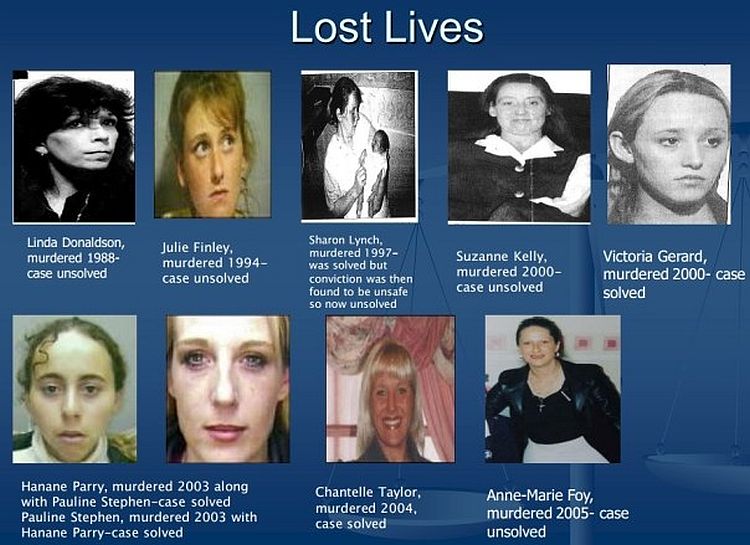
Violence against sex workers is increasing. Tragically, two sex workers have been murdered in London in the past three months. At the same time, the police have stepped up raids, arrests and closures of premises where women are working in relative safety. This is despite senior police officers admitting that: “[police] operations to tackle the trade are “counterproductive” and likely to put the lives of women at risk.”
Eighteen flats in Soho, Central London, have been closed. Most of the women who were evicted are mothers and have now lost their livelihood.
Women are appealing against eviction on 10, 17 and 24 February at Isleworth Crown Court. Please join us in demanding that these closures be stopped.
Please write urgently addressing your letters to:
MODEL LETTER at: http://prostitutescollective.net/2014/02/07/action-alert-stop-attacks-arrests-evictions-against-sex-workers
Background
Last December, 200 officers in riot gear with dogs raided sex workers’ flats in Soho. Some women were handcuffed and dragged out in their underwear in front of the media. Closure notices were issued against 18 flats and closure orders were then confirmed by a district judge in subsequent court cases.
In order to get a closure order, the police have to show that prostitution offences are being committed on the premises, namely “controlling for gain” and “causing and inciting prostitution”. Each court case followed a similar pattern. Women gave evidence that they were working independently and consensually and were not controlled. One woman explained: “Another sex worker told me about the address and that it was a good job . . . I decided to work as a prostitute . . . I wanted a better life and to support my two sons”.
Police claimed in court that women were controlled because they were “required to work certain days of the week, between certain times and charge a specified amount of money for each service”. No “controller” was named or identified.
District Judge Susan Williams found sex workers’ evidence “truthful”, admitted that “no evidence has been put before me of force and coercion” and acknowledged that a maid “is considered essential for safety”. But she rubber-stamped police claims that women were controlled and ruled that the “lure of gain and the hope of a better life” for women who were “desperate to earn some money” was “incitement”. She closed every flat that came before her. Why is women’s poverty and the determination to get out of it being used to justify the closure of safer premises?
Soho is one of the safest places for women to work as they have a maid or receptionist with them and the support of the local community. Of the two women recently murdered one was working on the street and one was working indoors, but alone. Most of the women who were evicted in Soho are mothers and grandmothers. Immigrant women were targeted by the police who took them away and held them for hours despite women protesting they were not trafficked.
Westminster Council backed the raids despite Cllr. Nickie Aiken’s claims that: “Our policy is that if a brothel is just providing a sex service, we just turn a blind eye because we think it is safer for the women and safer for the residents and other businesses around.”
Met police commander Alison Newcomb initially briefed the press that the raids were “to close brothels where we have evidence of very serious crimes happening, including rape and human trafficking.” But in NONE of the closure order cases has there been any evidence of rape or trafficking. Newcomb later admitted that “no specific number of women were suspected of being trafficked.” Why are these closures going ahead?
The Met Police just got European Union funding to tackle trafficking – were the raids staged to justify this money and get more?
Local people are concerned that the closures are to make way for the gentrification of historic Soho. Actor Rupert Everett, who came to court and wrote about it in the Observer, described what he saw as “a land-grab, facilitated by the police.”
Sex workers have been part of the Soho community for centuries. If they can be closed down without any evidence of force or coercion, any sex worker flat anywhere can be closed, in fact any flat – if a friend helps a sex worker design a website, that can be taken as evidence of control and the flat closed. Thirty seven premises were recently closed in Newham. Who will be safe then? How long before LBGTQ people or immigrants are targeted, or in fact anyone who doesn’t fit the ambitions of the land-grabbers?
If the police get away with this onslaught against those of us who have such strong and visible support, then attacks, arrests and evictions will escalate, especially against those of us who work on the street. One woman described the discrimination and degradation she faces at the hands of the police:
“The police wait outside my house to catch me when I leave. It doesn’t matter how I’m dressed, who I’m with, where I’m going, they say I’m loitering. When they stop me they jeer at me, and make jokes at my expense, often sexually explicit jokes. When they arrest me I’m strip searched and they sometimes leave the door open so the male officers can see in. All this is to humiliate me.”
In the name of safety, human and legal rights, and in the name of historic Soho
WE MUST STOP THESE CLOSURES!



 Soul Destruction